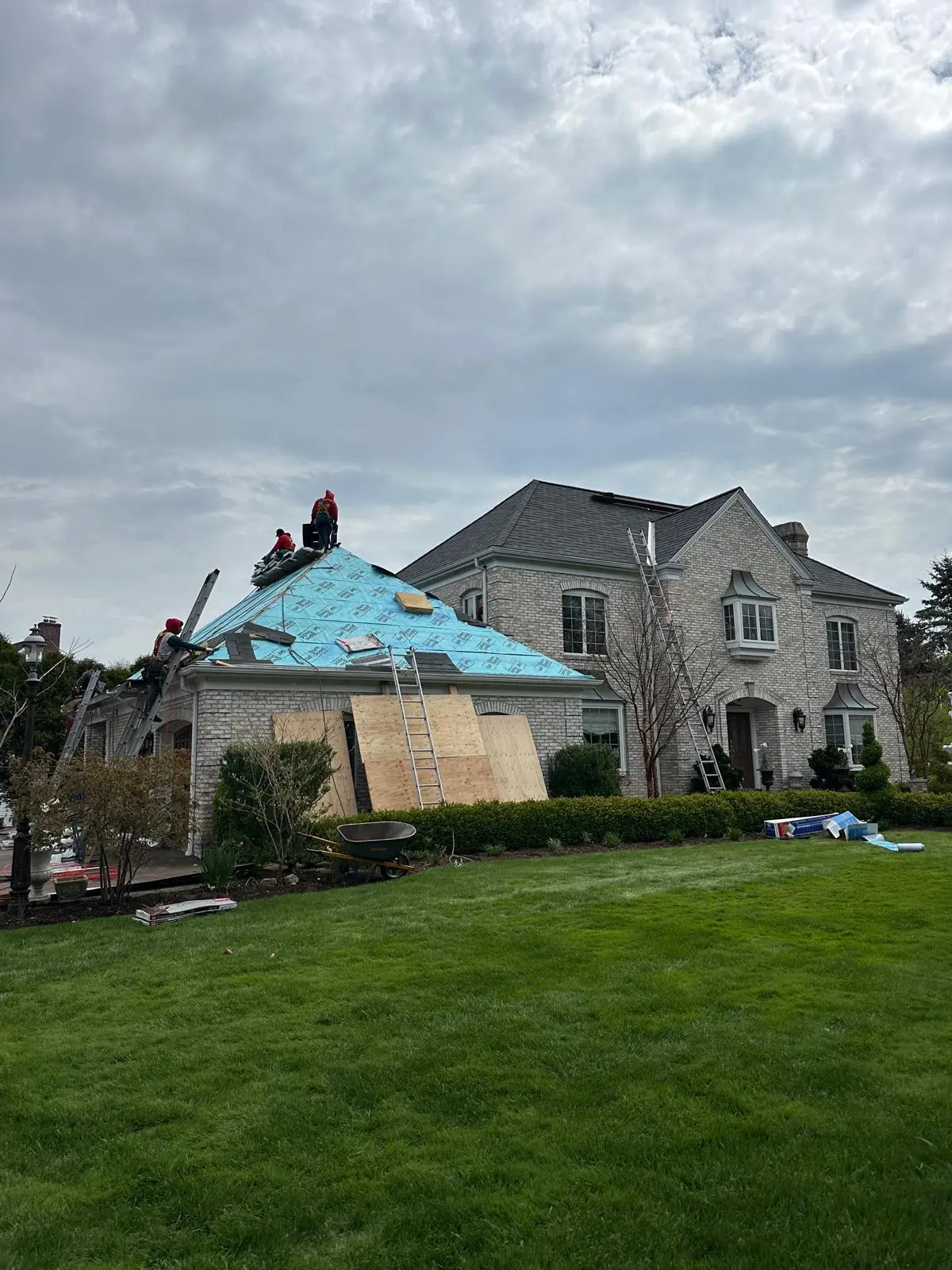
If your upstairs is ten degrees warmer than the rest of the house in July, or your energy bill keeps climbing without any change in how you live, the attic is worth looking at before anything else. Roof ventilation is one of those things nobody thinks about until something goes wrong, and by then the symptom usually looks like an insulation problem or an air conditioning problem instead. Here's what's actually happening. Your attic needs air to move through it continuously, entering low at the soffit and leaving high at the ridge. That airflow carries out heat in the summer and moisture in the winter. When it stops working, the attic becomes an oven in August and a condensation chamber in February. Both shorten the life of the roof above it, and both cost you money every month in the meantime. This article covers what ventilation does, how to tell if yours is working, and the one mistake that shows up on most Rhode Island homes.
What Attic Ventilation Actually Does
In summer, sun on the shingles heats the attic well past outdoor temperature. Without airflow, that heat sits there, radiates down through the ceiling insulation, and your air conditioning fights it all day. In winter, the job changes. Warm moist air from showers, cooking and breathing rises into the attic, hits the cold underside of the roof deck, and condenses. That moisture soaks the insulation, which stops insulating, and over enough seasons it rots the deck from below. Continuous airflow removes both problems by keeping the attic close to outdoor temperature and outdoor humidity. That sounds counterintuitive when you're trying to keep a house warm, but the insulation on the attic floor is what keeps the house warm. The attic itself is supposed to be cold.
Signs Your Ventilation Isn't Working
A few are easy to spot from inside. Upstairs rooms that stay uncomfortable no matter what the thermostat says. Frost on the underside of the roof sheathing in winter, which you can see with a flashlight from the attic hatch. Insulation that looks flattened, stained or damp. A musty smell in the attic. Ice dams every winter, which is the outdoor version of the same problem. From outside, look at your soffits: if they're solid panels with no vents, or the vents are painted shut, there is no intake. Shingles that look prematurely aged on one plane compared to another can also point to trapped heat underneath. Any of these on their own is worth checking. Two or three together is a pattern.
The Mistake We See Most: Exhaust Without Intake
Plenty of Rhode Island homes have a ridge vent installed and nothing feeding it. Air can't leave a space it can't enter, so a ridge vent with blocked or missing soffit intake does very little. Worse, it can pull conditioned air up out of the house through ceiling gaps instead, which costs you money and adds moisture to the attic. The fix is usually at the soffit, not at the ridge. Sometimes it's as simple as insulation that was pushed into the eave during a previous job and is now blocking the air channel. Baffles keep that path open. When someone quotes you a roof and never mentions the soffit, that's a gap in the quote worth asking about.
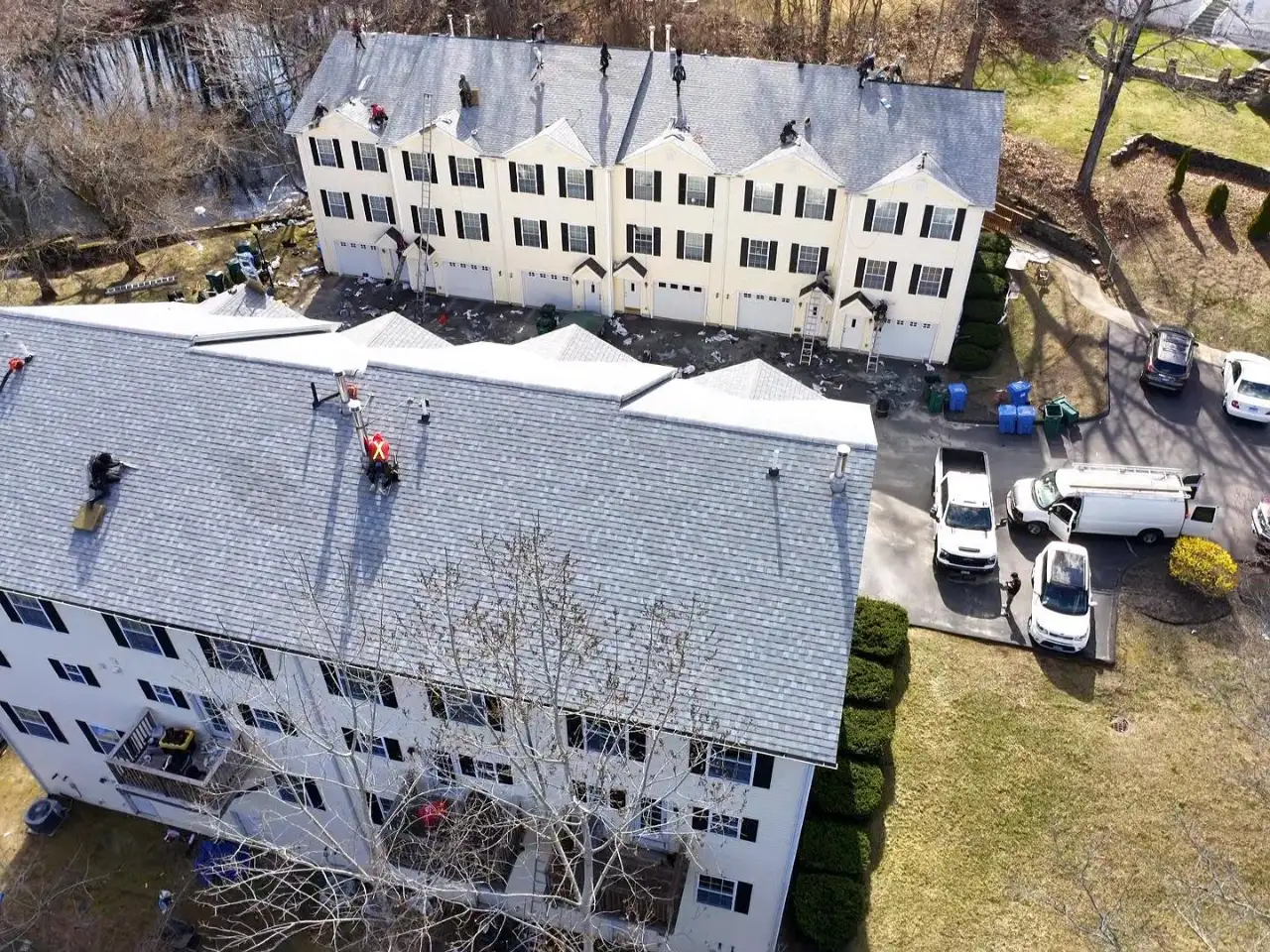
Why This Comes Up During a Roof Replacement
A roof replacement is the moment when ventilation is cheapest to correct, because the ridge is already open and the crew is already there. Adding a continuous ridge vent during a tear off costs a fraction of what it costs as a standalone job later. Clearing and baffling the soffit path is the same story. It's also the moment when the consequences of poor ventilation become visible: a deck with dark staining on the underside, or sheathing that feels soft near the eave, tells you the attic has been holding moisture for years. If that's what's found, fixing the airflow matters more than which shingle line goes on top of it.