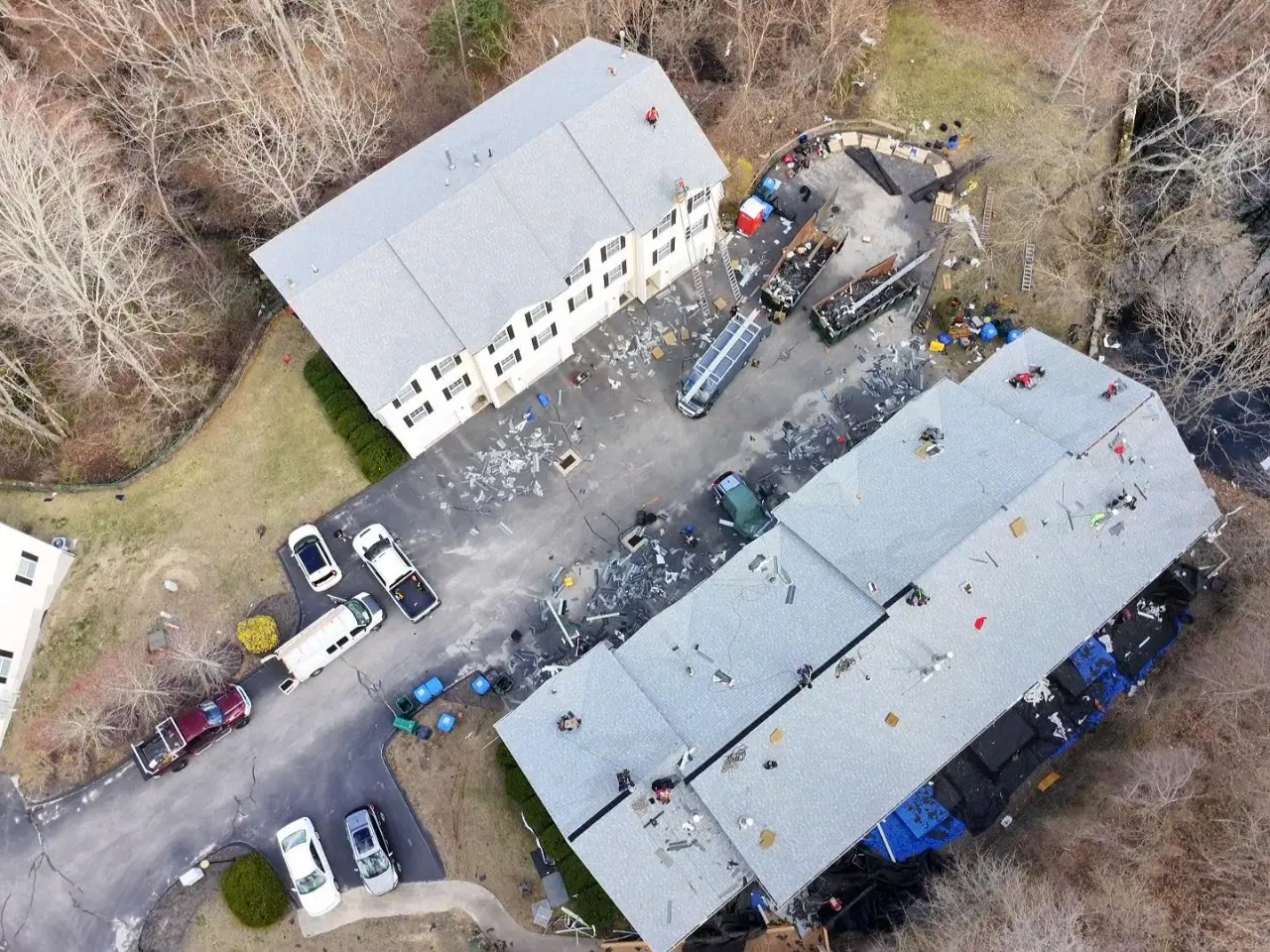
You've seen the icicles hanging off the eave in January, and they look almost decorative until water shows up on the ceiling inside. That's an ice dam, and it's one of the most common winter roof problems in Rhode Island. Here's the part that surprises most people: ice dams aren't really a roof problem. They're a heat problem. Warm air escaping from your living space into the attic melts the snow on the upper part of the roof. That water runs down, hits the cold overhang where there's no heat underneath, and freezes into a ridge of ice. Every storm after that adds more, and eventually water backs up behind the dam and works its way under the shingles. Rhode Island gives ice dams everything they need. We get real snow, we get freeze and thaw swings, and much of our housing stock was built before anyone thought hard about attic ventilation. This article covers why they form, what actually stops them, and what to do if one has already put water inside your house.
How an Ice Dam Actually Forms
Picture your roof on a cold day with six inches of snow on it. Heat from the house rises into the attic and warms the underside of the deck. Snow directly above that warm surface melts, even though it's twenty degrees outside. The meltwater runs down the slope until it reaches the overhang, which hangs past the exterior wall and has no warm air beneath it. There it refreezes. Do that for a few days and you get a solid ridge of ice at the eave. Now the next round of meltwater has nowhere to go. It pools behind the ice and sits on the shingles, and shingles are designed to shed running water, not to hold standing water. That's when it finds the seams and gets into the deck.
Why Older Rhode Island Homes Get Them More
Much of our housing stock in Providence, Woonsocket and the older village areas went up long before attic ventilation was standard practice. Those homes often have finished attic space, knee walls, or insulation packed tight against the roof deck with no air channel above it. Cape style houses are especially prone, because the low eave height leaves almost no room for air to move between the insulation and the sheathing. Add recessed lights, an attic hatch that doesn't seal, or a bathroom fan venting into the attic instead of outside, and you have a steady supply of warm moist air hitting the underside of a cold roof. The roof itself might be in perfect shape. The problem is happening underneath it.
What Actually Stops Ice Dams, and What Doesn't
The real fixes are boring: air sealing, insulation and ventilation. Seal the leaks where warm air escapes into the attic, get the insulation depth right, and give the space a continuous intake at the soffit with an exhaust at the ridge. A cold attic doesn't melt snow, and snow that doesn't melt can't refreeze at the eave. Heated cables help in specific spots, but they treat the symptom and they cost money to run all winter. An ice and water barrier along the eave is standard on a new roof and it protects the deck when water does back up, though it doesn't prevent the dam itself. Anyone selling you a new roof as the cure for ice dams is skipping past the actual cause.
What to Do If Water Is Already Coming In
First, don't get on the roof. A winter roof surface is the most dangerous place on the property, and more people get hurt clearing ice than get hurt by the leak itself. Don't chip at the ice with a hammer or a shovel either. You'll take shingles and gutter with it, and you'll turn a winter problem into a spring replacement. What you can do safely: pull snow off the lower few feet of the roof from the ground with a roof rake, put a bucket under the drip, and gently open a small hole in a bulging ceiling so the water drains in one controlled spot instead of spreading through the plaster. Then have someone look at it once conditions allow.