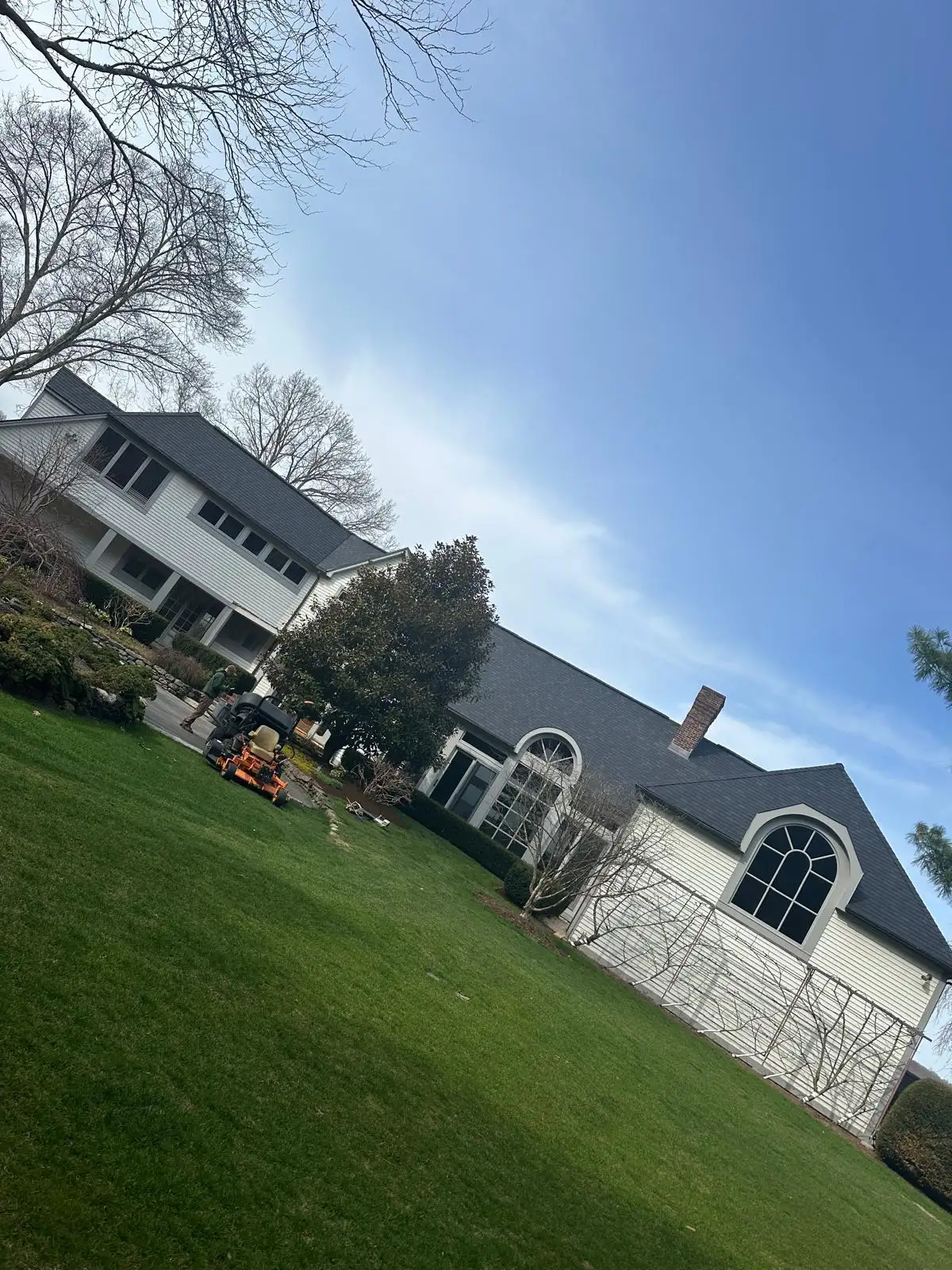
The storm passes, the wind drops, and the house looks fine from the driveway. That's the normal outcome after a nor'easter in Rhode Island, and it's also how most storm damage goes unnoticed until the next heavy rain. Nor'easters do something a summer thunderstorm doesn't. They push wind from one direction for hours, sometimes a full day, and they drive rain sideways. Sideways water gets into places vertical water never reaches: under a shingle course, behind a siding seam, past a piece of flashing that has been fine for fifteen years. On the shoreline in Warwick, Westerly and North Kingstown, add salt to that and you have a storm that works on fasteners as well as surfaces. This article walks through what you can check yourself from the ground, what usually can't be seen without getting up there, and what's worth doing in the days after a storm while the details are still fresh in your memory.
What a Nor'easter Does That Other Storms Don't
Duration is the difference. A thunderstorm hits hard for twenty minutes. A nor'easter can hold a steady thirty to fifty mile per hour wind from the northeast for most of a day, with gusts well above that. Shingles and siding panels are engineered to resist uplift, but resistance is rated against a load, not against a load repeated for fourteen straight hours. What usually happens is that a fastener works loose, the edge of a course lifts slightly, and it reseats itself when the wind stops. From the ground everything looks normal. The seal is broken, though, and the next ordinary rainstorm goes straight into that gap. Coastal Rhode Island adds salt spray, which lands on the same fasteners and starts working on them from a different angle.
What You Can Safely Check From the Ground
Start with a walk around the whole house, ideally with your phone taking photos. Look for shingles in the yard or in the gutters, dark patches where the granule surface has been stripped, or a course that looks lifted or crooked against the others. Check the ridge line for anything sitting out of plane. On the siding, look for cracked or missing panels, trim that has pulled loose, and dark streaks running down from a joint.Look at the gutters: a section that has sagged, separated at a seam, or pulled away from the fascia. Then check the ground under the eaves for pieces of anything. Do all of this from the yard. There is no reason to put a ladder up the day after a storm.
The Damage You Can't See From Down There
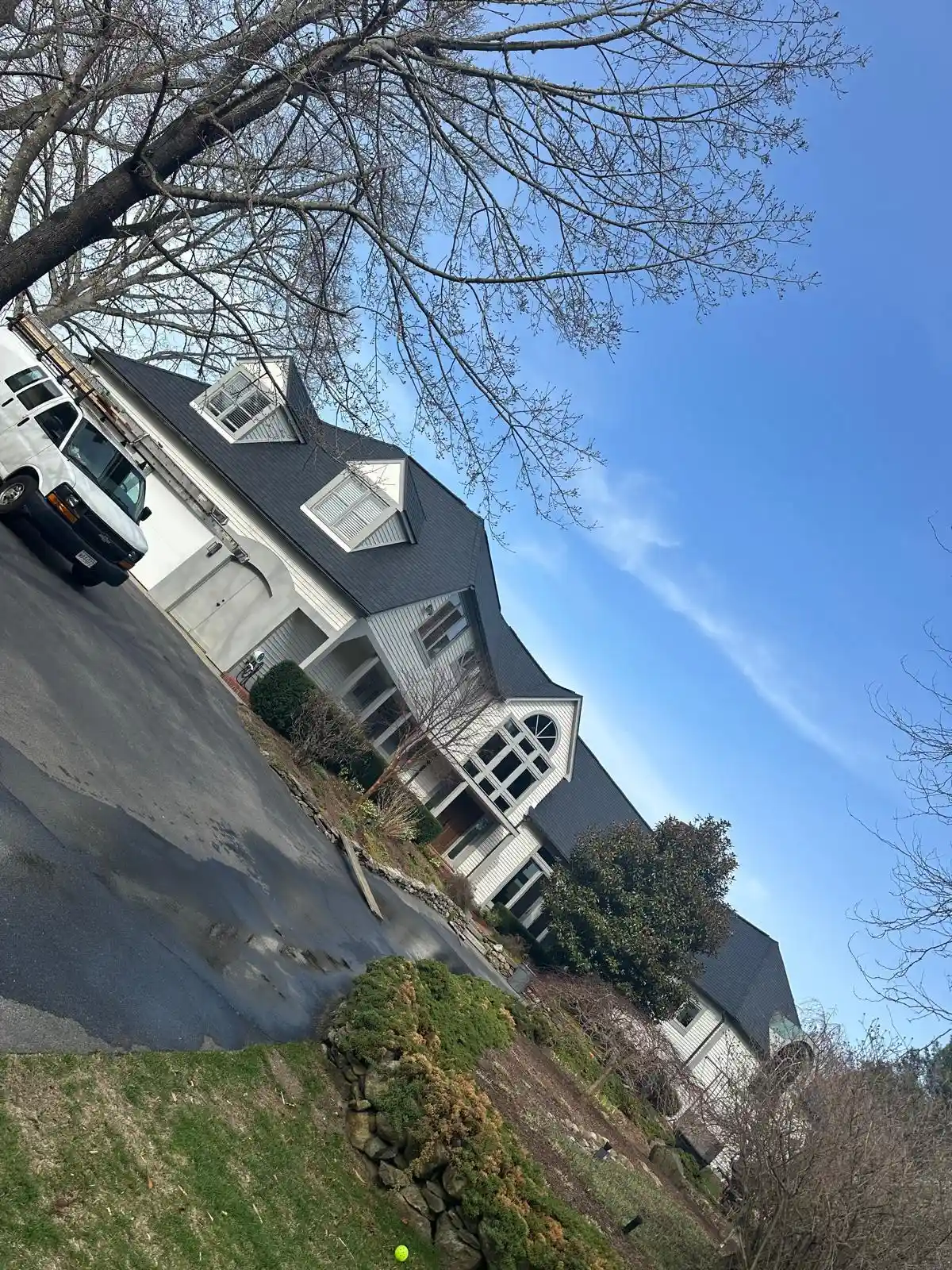
Most nor'easter damage is invisible at ground level, and that's the whole problem. A lifted shingle that reseated looks identical to one that never moved. Flashing pulled slightly away from a chimney or a sidewall shows nothing from the driveway. Fasteners that corroded through still hold the gutter up until the day they don't. Inside, the earliest signs often show up before anything appears on the outside: a faint stain at a ceiling corner, a musty smell in a closet on an exterior wall, paint bubbling near a window head. If you see any of that in the weeks after a storm, treat it as related until someone confirms otherwise. Water rarely enters where it eventually appears.
What to Do in the Days After
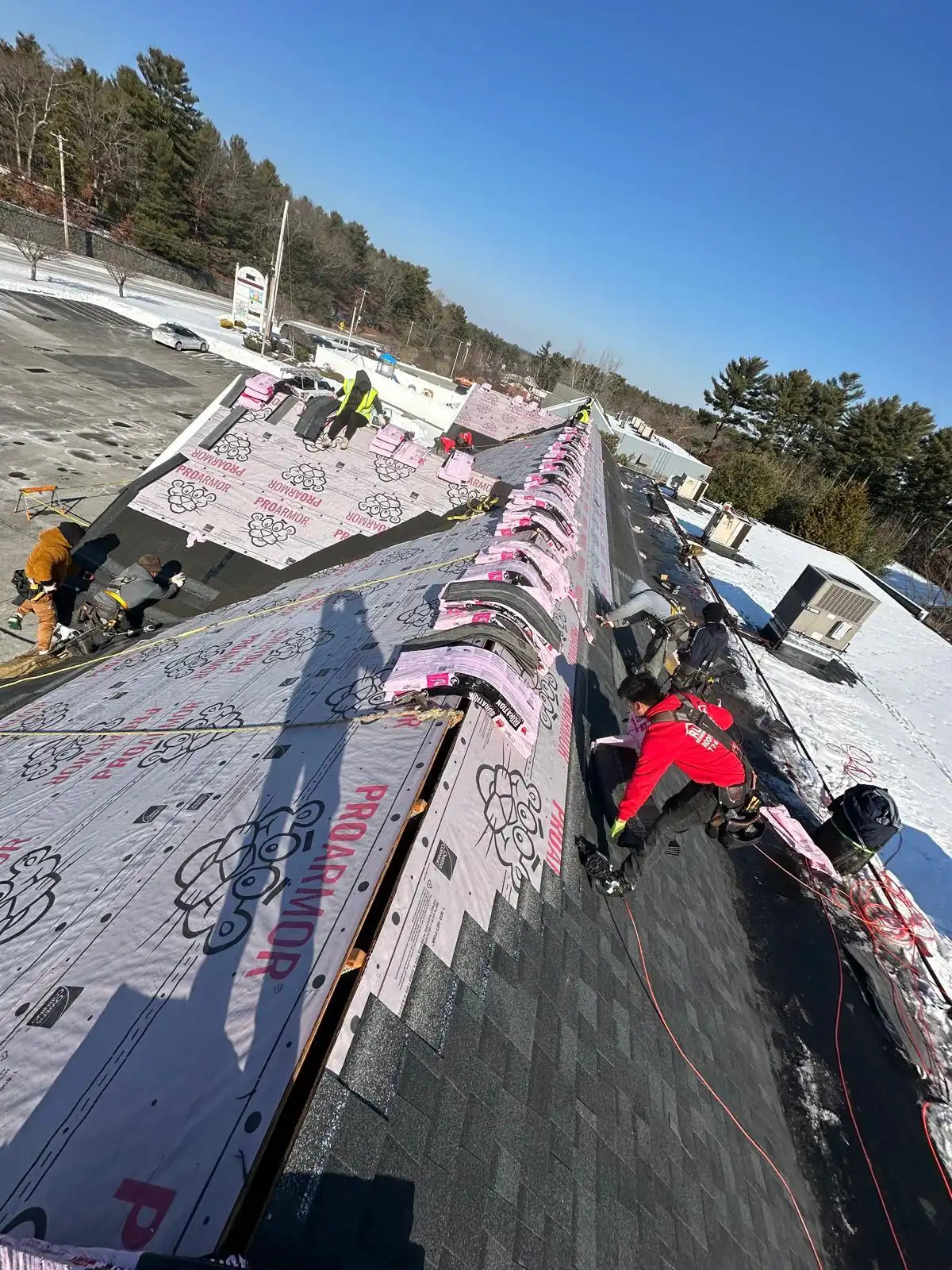
Write down the date of the storm and what you noticed, then keep the photos with it. That record is useful later whether or not anything comes of it, because a stain that appears in April is much easier to explain if you documented a February storm. If water is actively coming in, contain it inside and get the area looked at once conditions are safe. Be careful about anyone who shows up unannounced offering a free inspection right after a storm, especially if they want a signature the same day. A real inspection produces photos and a written scope, and it doesn't require you to decide anything on the spot.